THREE STRAND CORD
MA / MFA SHOW
june 1 - june 21, 2026
nayiah mcphaul
I’m not the best storyteller. I say events out of order, deliver punchlines flatly, and spend too much time on minor details. This trait follows me in the studio; there I can embrace my faulty storytelling through exploring incomplete plot-lines and characters through garments and sculptures.
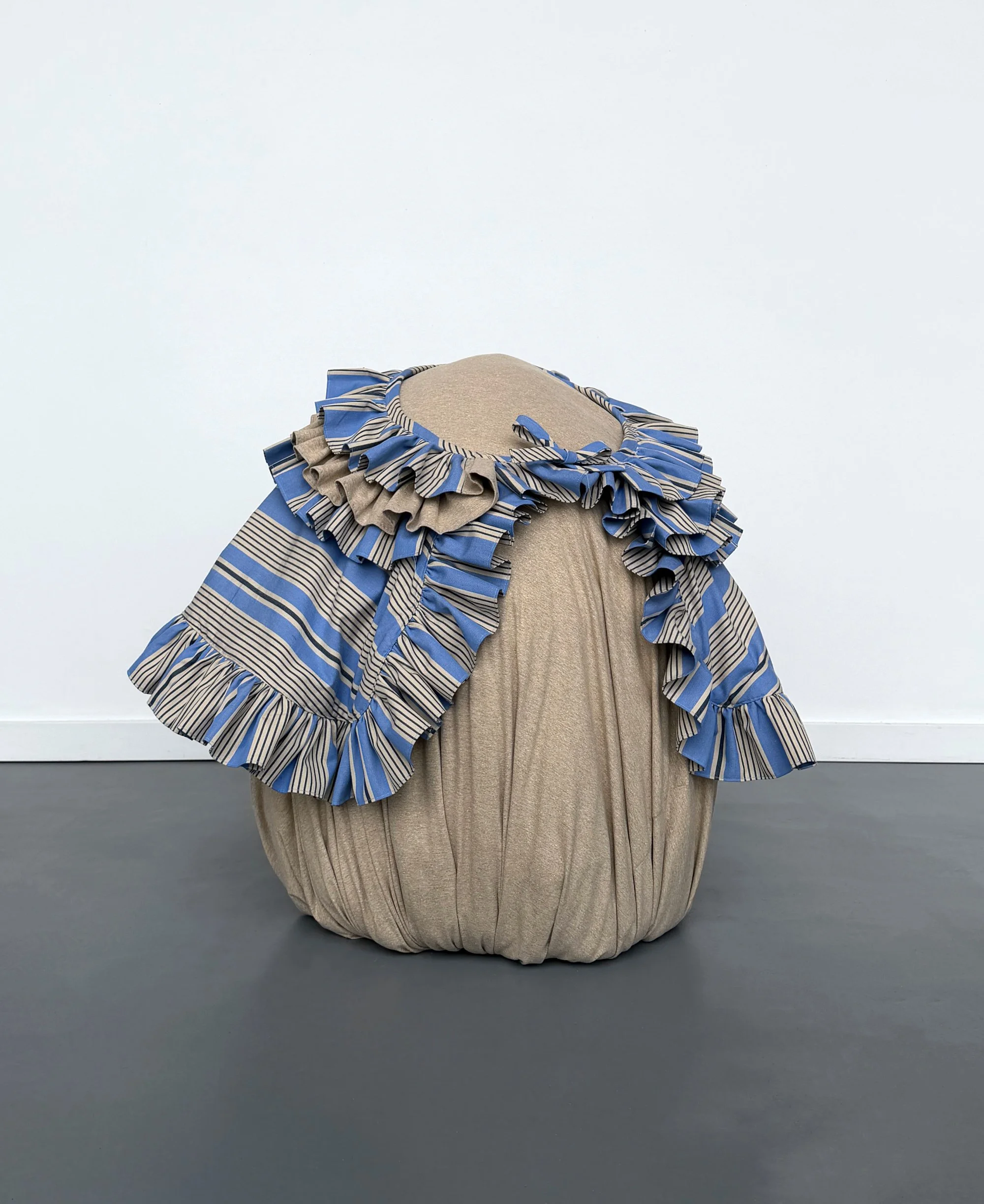
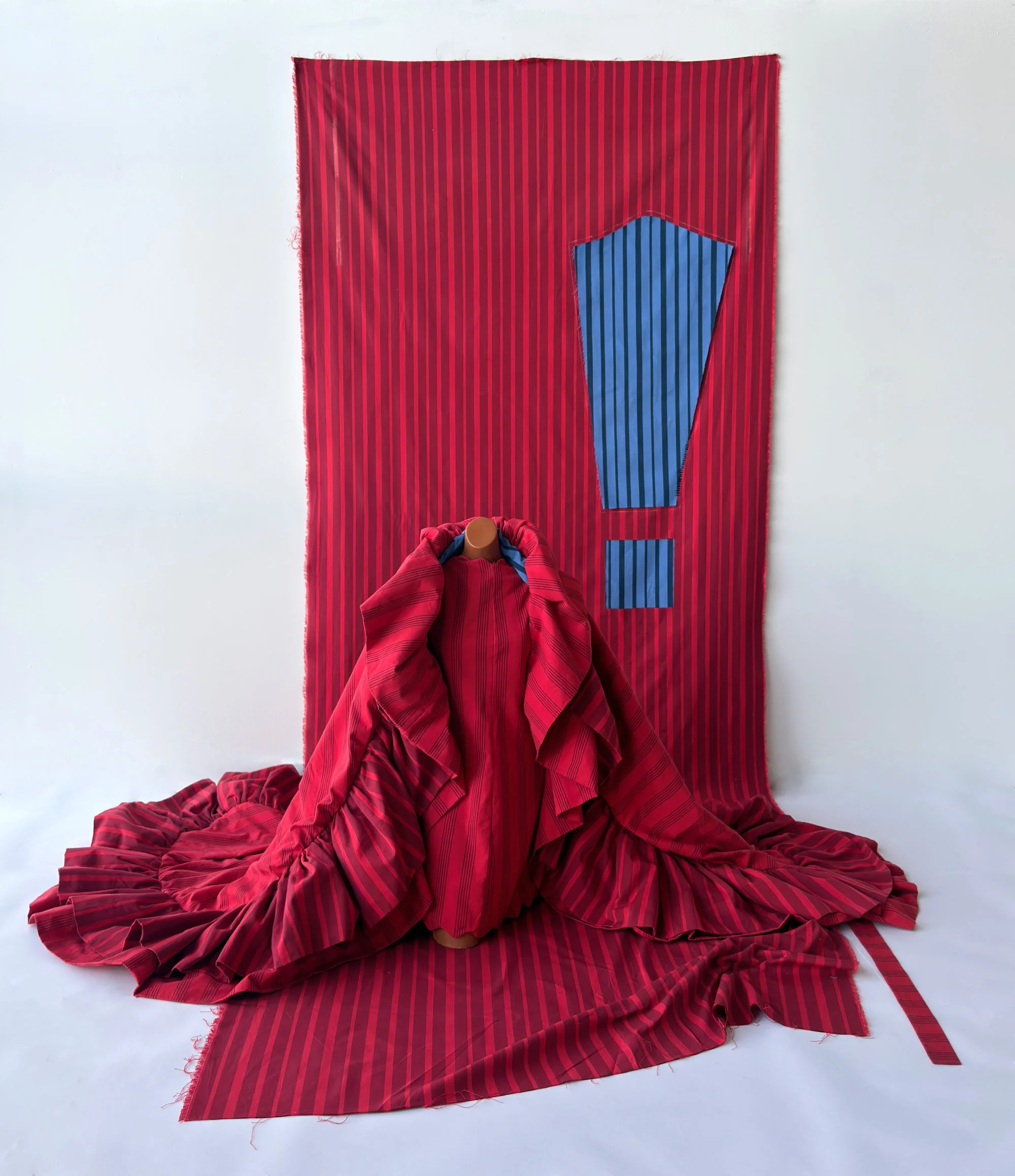
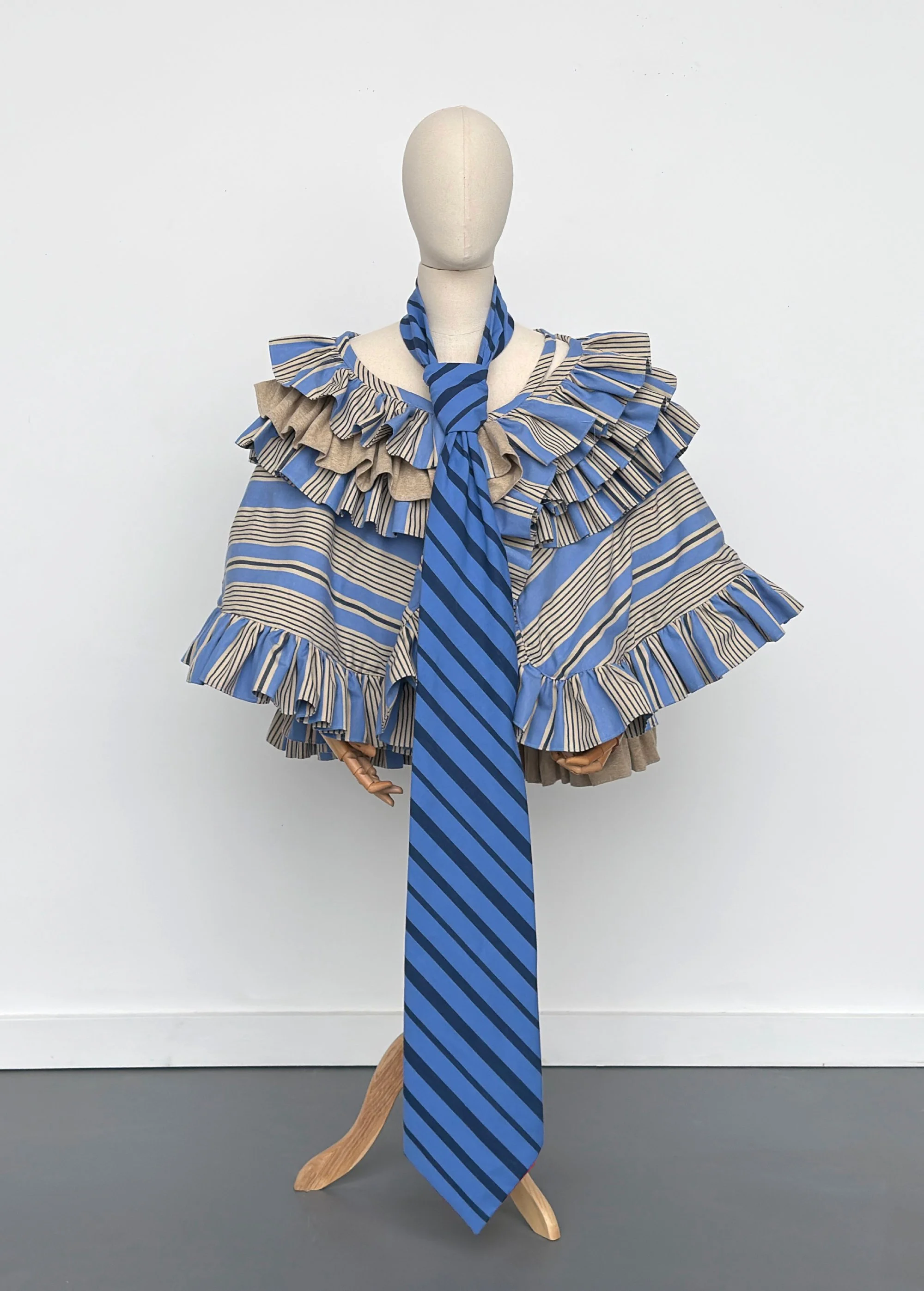
The stories are not recorded on paper or in notes. They are instead recorded in the stitching of a hem, the drape of the fabric, or the base of a sculpture. I work these stories out in three dimensions to give them a stage to perform on. I use stripes as a visual tool to guide the eye of the viewer. My interest in stripes stems from their simplicity, their repetition, their alerting pattern, and their directionality. The striped fabric bends and breaks around the volumes of the “mannequins,” lengthening or shortening the silhouette and moving the eye around the garment.
The garments are ready to wear and can be worn on different body types. They can also be displayed off the body in space, interacting with architecture or on the wall. The garments envelop the body, toying with the mystery of what is revealed and hidden, what is covered or uncovered; the threshold between what is recognizable and what is not.
I see my sculptures as mannequins pushed past their typical form. Beginning from a drawing, I build the structures with cardboard; their form shifting as the work develops. Their forms hint at the body while being simplified and exaggerated. The structure and form of the sculptures build upon the noticeable and unnoticeable features of the body making them identifiable as figures while remaining strange. They are life-size, commanding the same presence a person would. They can see eye to eye with the viewer.
The garments and mannequins work together to form characters in an incomplete, never-ending story; a stage emerges when they interact. The garment's identity can shift based on what wears it. On the sculpture it is a costume, on the wall or on the floor it becomes something else entirely. They can exist together or alone, but I like them to be in close proximity so they can stay in character on stage. It takes me back to playing pretend as a child — turning ordinary objects into costumes and props to best fit the story. There’s something alive in that transformation of objects, in the blur between what is seen and what is imagined.